Aeroseal Duct Sealing:
The 911 Mechanical "Clean Seal" Process
911 Mechanical’s Step-by-Step Guide to High-Performance Ductwork
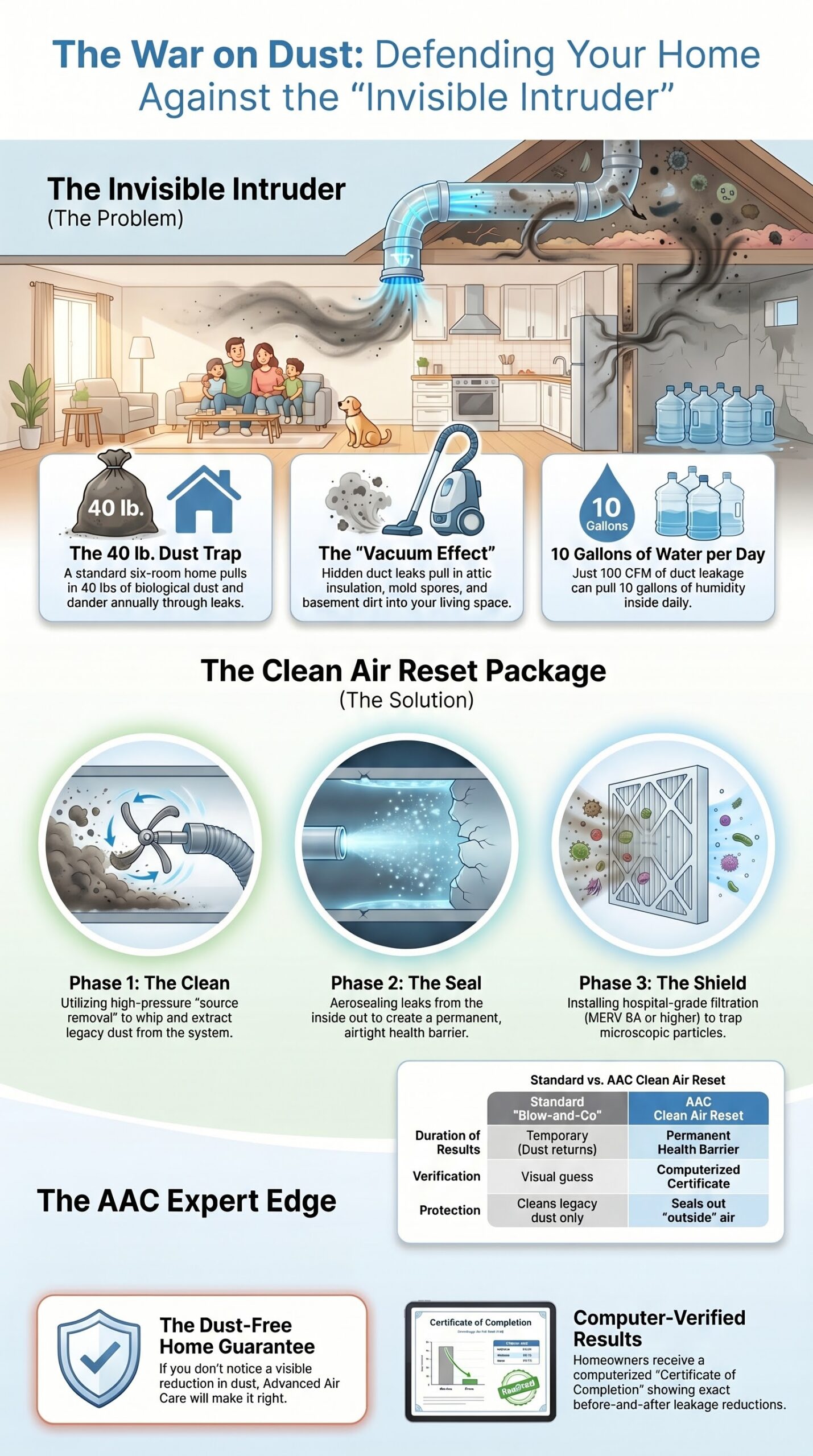
The average home loses 20% to 40% of its heated or cooled air through hidden duct leaks, forcing your system to work harder, degrading indoor air quality, and raising energy bills.
The Hidden Problems in Your Ductwork
(And How We Fix Them)
Conditioned Air Loss:
The average home loses 20% to 40% of its heated or cooled air through hidden duct leaks, forcing your system to work harder and shortening its lifespan.
The "$400 Leak Tax":
Leaky ducts lead to an estimated $300 to $700 annual utility bill increase.
The 40 lb. Dust Cloud:
Unsealed ducts draw up to 40 lbs of biological dust, insulation fibers, mold spores, and dander annually from your attic, crawlspaces, or basements.
The 911 Mechanical
3-Step Implementation Process
Step 1:
Manual Inspection & Repair
Fixing Catastrophic Issues First
Before deploying our computerized sealing technology, our certified technicians physically inspect the infrastructure to handle structural failures.
- Locating Massive Gaps: The Aeroseal polymer is highly effective for sealing seams and cracks up to 5/8 of an inch. For severe duct leakage due to poor construction, we locate these zones first (which may occasionally require precise drywall access).
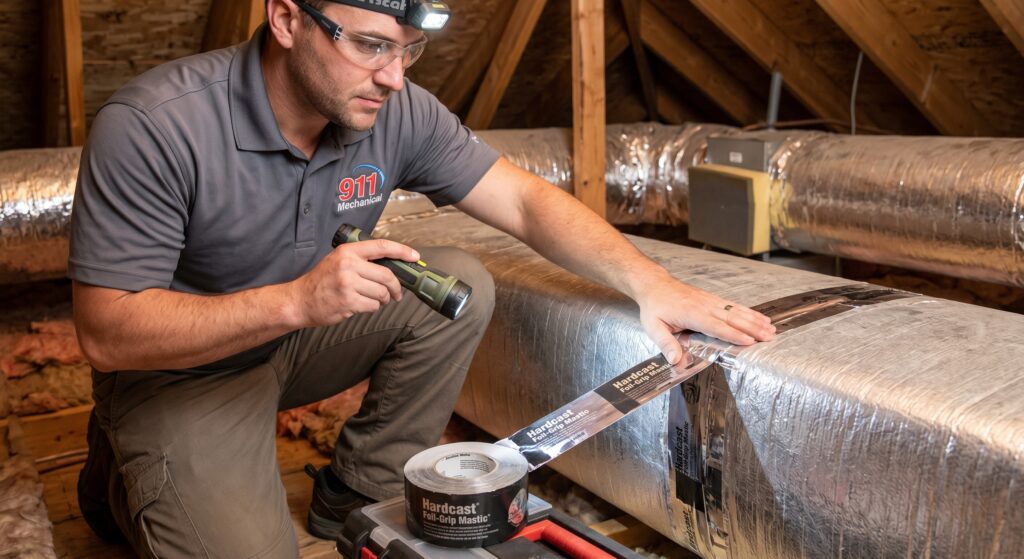
- Manual Patching & Mastic Sealing: Technicians physically repair large disconnected pipes or crushed lines using premium Hardcast Foil-Grip tape (roll mastic sealant) for a permanent, mechanical hold.
- HVAC Equipment Isolation: To safeguard your expensive heating and cooling components, we place physical foam barriers to safely isolate your furnace, air handler, AC coils, or heat pump from the aerosol mist.
Step 2:
Source-Removal Ductwork Cleaning
The "Clean Seal" Advantage
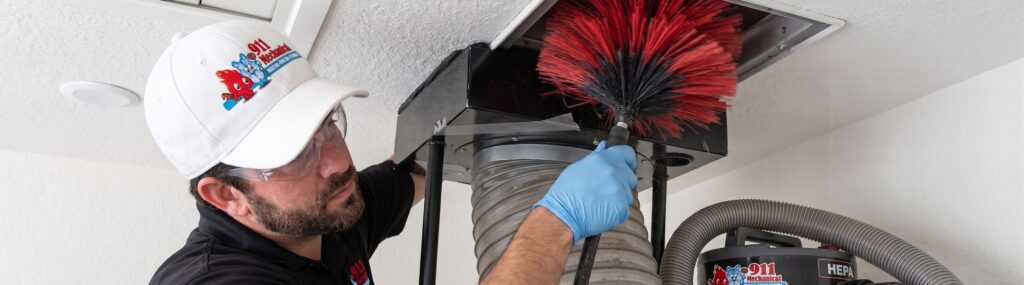
While some contractors treat duct cleaning as an optional add-on, 911 Mechanical mandates a comprehensive source-removal cleaning using NADCA standards immediately following physical repairs.
- Promoting Maximum Adhesion: Removing “legacy dust,” dirt, and drywall construction soot creates a pristine metal surface for the Aeroseal polymer to bond with permanently.
- Protecting Your Living Spaces: Because the Aeroseal process increases internal duct pressure, any loose debris left inside would be forcefully blown out of your registers into your clean home upon system startup.
- Preserving Seal Integrity: Cleaning after sealing runs a severe risk of mechanical brushes scraping or chipping away the fresh polymer barrier. Our unified process cleans first, ensures 100% extraction, and immediately prepares the line for sealing.
Step 3:
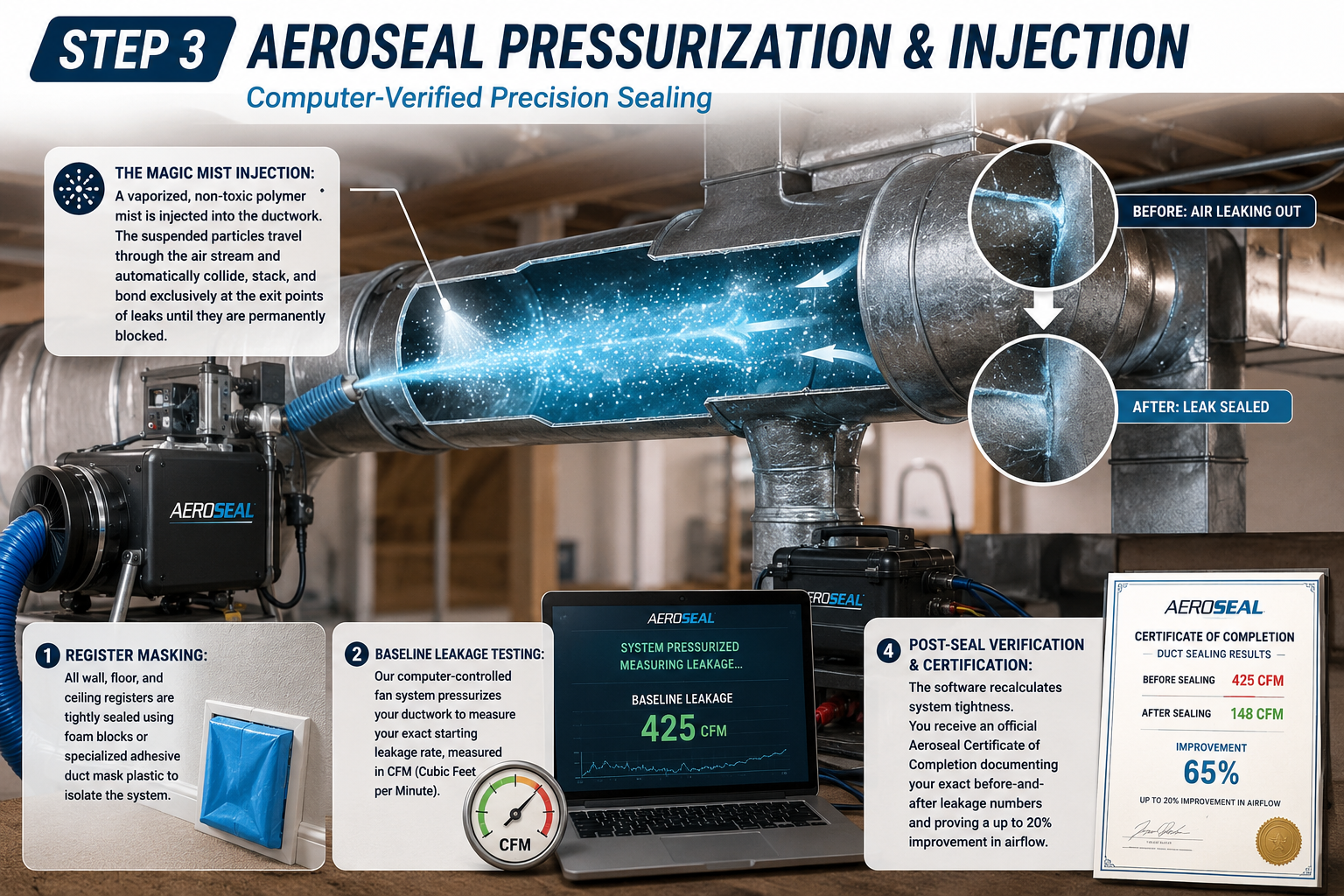
Aeroseal Pressurization & Injection
Computer-Verified Precision Sealing
The automated aerosol process is the definitive final step to guarantee an airtight duct system.
- Register Masking: All wall, floor, and ceiling registers are tightly sealed using foam blocks or specialized adhesive duct mask plastic to isolate the system.
- Baseline Leakage Testing: Our computer-controlled fan system pressurizes your ductwork to measure your exact starting leakage rate, measured in CFM (Cubic Feet per Minute).
- The Magic Mist Injection: A vaporized, non-toxic polymer mist is injected into the ductwork. The suspended particles travel through the air stream and automatically collide, stack, and bond exclusively at the exit points of leaks until they are permanently blocked.
- Post-Seal Verification & Certification: The software recalculates system tightness. You receive an official Aeroseal Certificate of Completion documenting your exact before-and-after leakage numbers and proving a up to 20% improvement in airflow.
Frequently Asked Questions
Why can't you just clean the ducts after sealing them?
Professional duct cleaning relies on heavy mechanical agitation (brushes, whips, and high-power negative pressure). If done after sealing, it risks chipping or scraping the newly formed polymer seals. Cleaning first guarantees the seal stays permanent and untouched.
Is the Aeroseal polymer mist safe for my family and pets?
Yes. The Aeroseal polymer is non-toxic, safe, and regularly used in commercial environments like hospitals and schools. It is suspended only within your sealed ductwork during application, and your equipment is entirely isolated during the process.
How much money will I save by sealing my ducts?
Homeowners experience an average of 15% to 25% in heating and cooling energy savings, which can offset initial installation costs rapidly while significantly reducing wear and tear on your HVAC equipment.
WAR ON DUST
Ready to Make Your Home Healthy and Happy, So You Can Breathe Freely?
Stop pulling dirty air into your living spaces. Secure your home’s air quality at the source.